
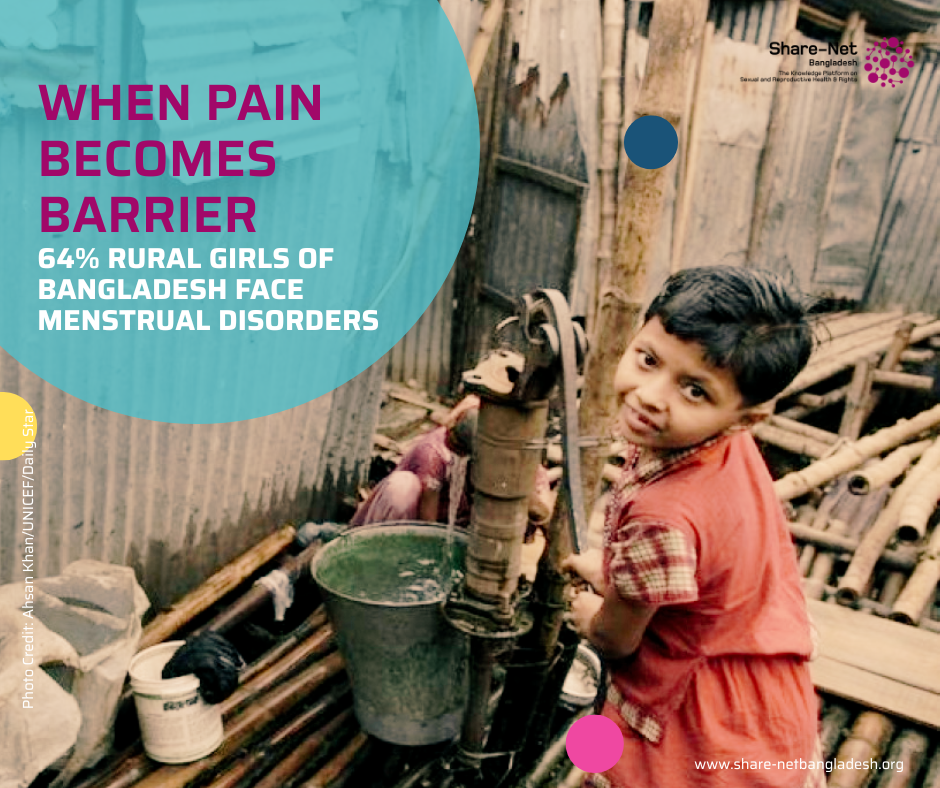
When Pain Becomes Barrier: 64% Rural Girls of Bangladesh Face Menstrual Disorders
For millions of adolescent girls, menstruation is a natural part of growing up. Yet in many rural communities across Bangladesh, it remains a topic wrapped in silence. Behind closed doors, girls continue to endure severe pain, anxiety, and misinformation, often sacrificing their education and wellbeing simply because their menstrual health is not taken seriously.
A new study by icddr,b offers a sobering reminder that menstrual health is not merely a hygiene issue. It is a fundamental Sexual and Reproductive Health and Rights (SRHR) concern that directly affects education, gender equality, and adolescent wellbeing.
Presented in June 2026 through the AdSEARCH project, the study followed 2,713 adolescents in Rajbari’s Baliakandi Health and Demographic Surveillance System between 2023 and 2025. Among 1,255 girls aged 12 to 16, nearly 64 percent reported experiencing at least one menstrual disorder, while 56 percent suffered from dysmenorrhoea, or painful menstruation.
The findings go beyond physical discomfort. Nearly 40 percent of girls said menstrual pain disrupted their daily activities, and around one in four missed school because of severe pain or heavy menstrual bleeding. For many, monthly periods have become a recurring interruption to education, confidence, and participation in everyday life.
Professor Dr Farhana Dewan, former President of the Obstetrical and Gynaecological Society of Bangladesh, captured the challenge clearly: “Social stigma often prevents adolescent girls, particularly in rural areas, from discussing menstrual problems.” Her observation reflects a reality where many girls continue to suffer without diagnosis, treatment, or emotional support.
The research also uncovered worrying gaps in reproductive health knowledge. More than one-third of adolescent boys did not know that pregnancy becomes possible after menstruation begins. Awareness of family planning methods also remained uneven. While 84 percent of boys had heard about condoms, only 45 percent of girls were aware of them. Knowledge of emergency contraceptive pills was even lower, with just four percent of girls reporting awareness.
These findings are particularly significant because the study found that girls who understood family planning before marriage were half as likely to experience an unintended pregnancy compared to those without such knowledge.
Bangladesh has made notable progress in adolescent health over the past decade. According to the Bangladesh Demographic and Health Survey 2022 and recent UNFPA Bangladesh estimates, child marriage continues to decline gradually, and adolescent health services are expanding through government and partner initiatives. The Directorate General of Family Planning is introducing premarital counselling into its programmes, while the Directorate General of Health Services is developing “Adolescent Friendly Local Body” initiatives to improve access to youth-friendly healthcare.
Yet progress remains uneven.
For rural adolescents, menstrual pain is often dismissed as “normal,” while conversations about reproductive health remain restricted by cultural taboos. Without school-based menstrual health education, trained healthcare providers, affordable pain management, and supportive families, many girls continue to navigate adolescence alone.
Menstrual health should never determine whether a girl attends school, participates in sports, or dreams about her future.
As Bangladesh continues advancing its SRHR agenda, the latest evidence serves as a timely reminder that improving menstrual health is not simply about providing sanitary products. It requires investing in education, breaking harmful stigma, strengthening adolescent-friendly health services, and ensuring that every young person has access to accurate, evidence-based reproductive health information.
Because when girls are empowered to manage their menstrual health with dignity, the benefits extend far beyond one classroom. They strengthen families, communities, and the nation’s future.